
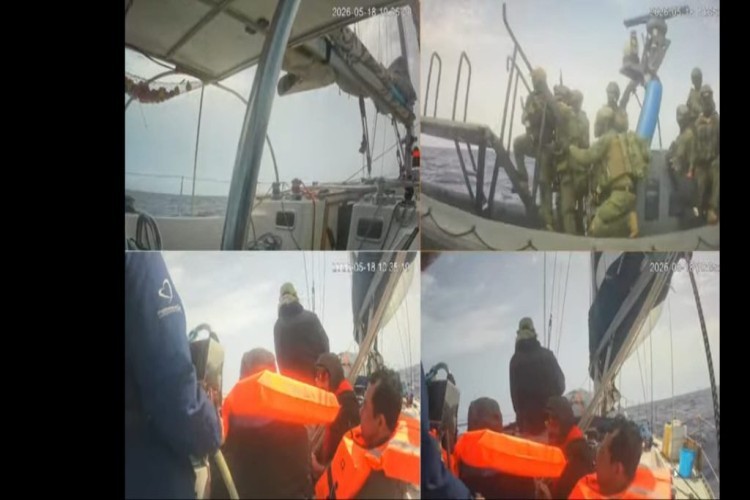
Global Sumud Flotilla faces Israeli occupation naval repression amid Gaza siege
May 26, 2026
Al-Qassam Website - The Israeli occupation’s interception of the International Sumud Flotillas highlights the ongoing reality of military control, collective punishment, and repression imposed on Palestinians for decades. The flotillas, launched as a peaceful humanitarian mission to break the illegal siege on Gaza, were intercepted by Israeli occupation naval forces, and several activists on board were kidnapped.
Among those kidnapped were Brazilian activists Thiago Ávila and Saif Abu Kishk whose detention has drawn comparisons to the treatment of thousands of Palestinians held in Zionist Israeli dungeons under harsh conditions, including administrative detention — a policy that allows the occupation to imprison Palestinians for months or years without charges or trial.
Palestinian detainees and human rights groups have repeatedly documented conditions inside the infamous Israeli prisons, including prolonged isolation, medical neglect, restrictions on family visits, overcrowding, physical abuse, and the denial of basic legal rights. Administrative detention, in particular, has become one of the most criticized tools used by the occupation, as detainees are often denied access to evidence against them.
The interception of the flotillas is part of a wider system designed to maintain the occupation’s control while silencing voices that attempt to expose conditions in the devastated enclave and the occupied West Bank. The blockade on Gaza, combined with the imprisonment of Palestinians and the targeting of solidarity missions, reflects the occupation's relentless endeavors to isolate Palestinians politically, physically, and internationally.
The mission of the flotillas sought to challenge not only the siege on Gaza, but also the broader reality of occupation, displacement, and restrictions imposed on Palestinians’ freedom of movement and daily life. Kidnapping international activists demonstrates how far the occupation is willing to go to prevent humanitarian and pro-Palestine initiatives from reaching global audiences.
Despite repeated crackdowns, Palestinians and solidarity activists continue to insist that international attention on Gaza, prisoners’ conditions, and the occupation’s policies remains essential. The International Sumud Flotilla represents an attempt to break both the physical blockade on Gaza and the political silence surrounding the suffering of Palestinians living under occupation.
Following the kidnapping of activists aboard the first Global Sumud Flotilla, Israeli occupation naval forces escalated their attacks against another flotilla participating in the international solidarity campaign. Activists stated that the occupation navy surrounded the ships, threatened those on board, and kidnapped those on board while sailing in international waters in order to prevent humanitarian aid and international witnesses from reaching the besieged enclave.
The repeated targeting of the Global Sumud Flotillas demonstrates the occupation’s determination to suppress all forms of peaceful international solidarity with Palestinians. By attacking humanitarian missions and detaining activists, the occupation seeks to reinforce the blockade on Gaza while discouraging future initiatives aimed at exposing the humanitarian catastrophe and ongoing violations faced by Palestinians under occupation.