
Analysis: What Does Gaza Escalation Mean for Appetite for Calm?

Ben White
a freelance writerAs recently as Sunday morning, all signs pointed to a longer-term truce taking hold between Israel and Palestinian factions in the besieged Gaza Strip. But only a four hours later, that prospect seemed far more distant.
On Sunday evening, the Israeli occupation forces launched a secret operation in the coastal enclave that killed seven Palestinians, including a senior commander of Al- Qassam Brigades, Nour Baraka.
On Monday, Palestinian factions responded to the Israeli occupation attack by firing hundreds of missiles into southern occupation settlements. The barrage of projectiles was of unprecedented intensity, albeit intentionally limited in geographic scope.
Israeli air raids kill five Palestinians as Gaza tensions rise
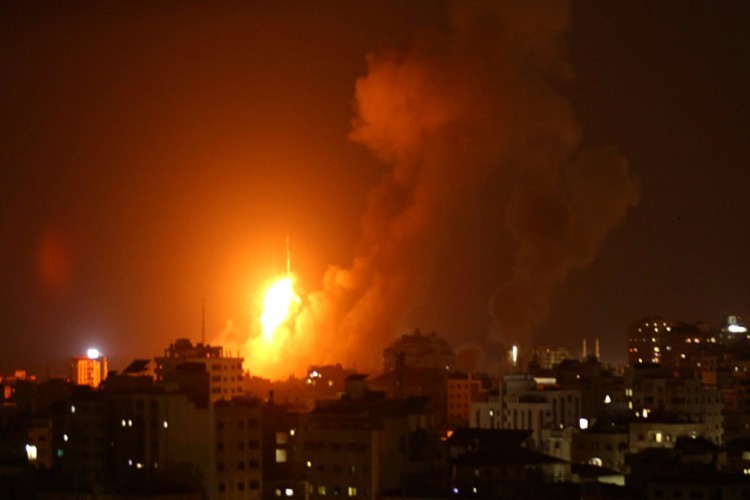
The Israeli occupation, meanwhile, met the retaliatory rocket-and-mortar fire with dozens of air raids across the blockaded territory. By Tuesday afternoon, at least seven other Palestinians had been killed and a number of buildings - including the offices of Al-Aqsa television channel - had been destroyed.
In the immediate aftermath of Israel's Sunday raid, speculation abounded as to why Israeli occupation forces would have carried out such a provocation given the advanced stage of truce talks amid mediation efforts by Egypt, the United Nations and Qatar.
Indeed, just hours earlier, Israeli occupation Prime Minister Benjamin Netanyahu was justifying a ceasefire deal to the Israeli public.
An Israeli military spokesperson officially denied that the objective of the raid had been to either kill or capture a Palestinian target, but refused to elaborate on precisely what the aim had been.
Whatever the original goal had been, Israel's deadly attack reflected a significant Israeli intelligence and operational failure. Moreover, Palestinian journalist Jehan Alfarra said the raid was "seen as a provocation attempt against Palestinian resistance factions".
"And just as things seemed to be improving for some of Gaza's besieged population, this raid destabilized the situation again".
Haneen Zoabi, a Palestinian member of the Knesset, the Israeli parliament, said that while "Israel wasn't interested in obstructing the truce talks nor in conducting a war or a large military campaign," officials believed Israel's "military capacities would provide it with a certain victory without too much trouble nor too many losses."
Zoabi added: "Israel always tries to gain from the best of both worlds at the same time: to be violent in the background and also enjoy talks about a truce."
The signs late on Tuesday were that a fresh ceasefire meant the end to this latest round of violence. But what do the events of the last two days say about what's coming next?
"There is an appetite for a calm and quiet period," said Zoabi, "but the silence exists only on the surface. In reality, there are continuous, secret [Israeli] army campaigns and operations in order to continue the control over the area - and the Palestinians continue to suffer in silence."
The legislator's views were echoed by Noa Landau, an Israeli political affairs journalist who wrote this week: "Netanyahu doesn't believe there is a long-term diplomatic solution in Gaza. Moreover, he opposes the very idea of such a thing."
"The views and opinions expressed in this article are those of the author."

Gaza is not an aberration - Israel planned this genocide decade ago
JONATHAN COOK
An award-winning independent journalist and author.
The Released Palestinian Prisoners: Exhausted Bodies and Spirits Reaching the Sky
Tala Nasir
Write and rights activistAt the end of each week since the end of the genocide war, we eagerly await the announcement of the names of the Palestinian prisoners scheduled for release on the following day.



Nothing “started” on 7 October 2023, when Hamas broke out for a single day of the Gaza “concentration camp”. Rather, Israel found an excuse that day to breathe new life into an old story, one in which it has been slaughtering and expelling Palestinians for decades.