
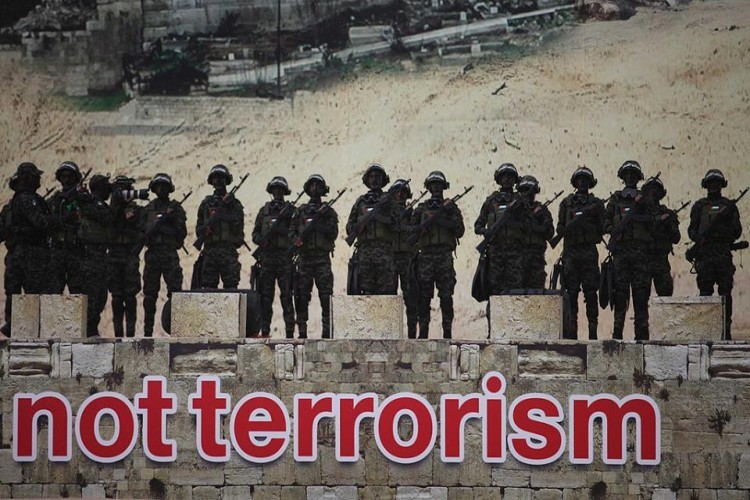
Palestinians Have a Legal Right to Armed Struggle

Stanley L Cohen
An attorney and human rights activistIn Palestine, international law recognizes the fundamental rights to self-determination, freedom and independence for the occupied.
Long ago, it was settled that resistance and even armed struggle against a colonial occupation force is not just recognized under international law but specifically endorsed.
In accordance with international humanitarian law, wars of national liberation have been expressly embraced, through the adoption of Additional Protocol I to the Geneva Conventions of 1949, as a protected and essential right of occupied people everywhere.
Finding evolving vitality in humanitarian law, for decades the General Assembly of the United Nations (UNGA) - once described as the collective conscience of the world - has noted the right of peoples to self-determination, independence and human rights.
Indeed, as early as 1974, resolution 3314 of the UNGA prohibited states from "any military occupation, however temporary".
In relevant part, the resolution not only went on to affirm the right "to self-determination, freedom and independence [...] of peoples forcibly deprived of that right, [...] particularly peoples under colonial and racist regimes or other forms of alien domination" but noted the right of the occupied to "struggle ... and to seek and receive support" in that effort.
The term "armed struggle" was implied without precise definition in that resolution and many other early ones that upheld the right of indigenous persons to evict an occupier.
This imprecision was to change on December 3, 1982. At that time UNGA resolution37/43 removed any doubt or debate over the lawful entitlement of occupied people to resist occupying forces by any and all lawful means. The resolution reaffirmed "the legitimacy of the struggle of peoples for independence, territorial integrity, national unity and liberation from colonial and foreign domination and foreign occupation by all available means, including armed struggle".
A palpable illusion
Though Israel has tried, time and time again, to recast the unambiguous intent of this precise resolution - and thus place its now half-century-long occupation in the West Bank and Gaza beyond its application - it is an effort worn thin to the point of palpable illusion by the exacting language of the declaration itself. In relevant part, section 21 of the resolution strongly condemned "the expansionist activities of Israel in the Middle East and the continual bombing of Palestinian civilians, which constitute a serious obstacle to the realization of the self-determination and independence of the Palestinian people".
Never ones to hesitate in rewriting history, long before the establishment of the United Nations, European Zionists deemed themselves to be an occupied people as they emigrated to Palestine - a land to which any historical connection they had had long since passed through a largely voluntary transit.
Indeed, a full 50 years before the UN spoke of the right of armed struggle as a vehicle of indigenous liberation, European Zionists illegally co-opted the concept as the Irgun, Lehi and other terrorist groups undertook a decade's long reign of deadly mayhem.
During this time, they slaughtered not only thousands of indigenous Palestinians but targeted British police and military personnel that had long maintained a colonial presence there.
Long ago, the famed abolitionist Frederick Douglass, himself a former slave, wrote of struggle. These words resonate no less so today, in Palestine, than they did someone 150 years ago in the heart of the Antebellum South in the United States:
"If there is no struggle, there is no progress. Those who profess to favor freedom, and yet depreciate agitation, are men who want crops without plowing up the ground. They want rain without thunder and lightning. They want the ocean without the awful roar of its many waters. This struggle may be a moral one; or it may be a physical one; or it may be both moral and physical; but it must be a struggle. Power concedes nothing without a demand. It never did and it never will."
The views expressed in this article are the author's own and do not necessarily reflect Al Qassam Brigades' editorial policy.
Source: Al Jazeera
"The views and opinions expressed in this article are those of the author."

Gaza is not an aberration - Israel planned this genocide decade ago
JONATHAN COOK
An award-winning independent journalist and author.
The Released Palestinian Prisoners: Exhausted Bodies and Spirits Reaching the Sky
Tala Nasir
Write and rights activistAt the end of each week since the end of the genocide war, we eagerly await the announcement of the names of the Palestinian prisoners scheduled for release on the following day.



Nothing “started” on 7 October 2023, when Hamas broke out for a single day of the Gaza “concentration camp”. Rather, Israel found an excuse that day to breathe new life into an old story, one in which it has been slaughtering and expelling Palestinians for decades.