Rebuilding Gaza amid Politics and Funding: The Battle of Construction After Destruction
February 14, 2026
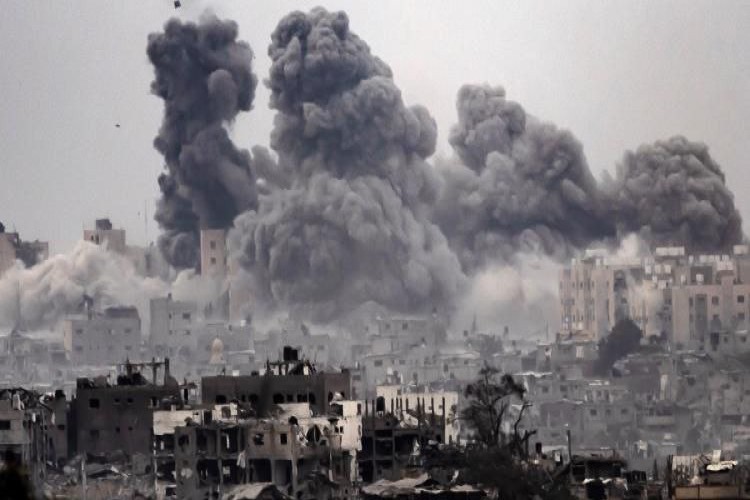
Al-Qassam Website - When a ceasefire came into effect in Gaza on October 13, 2025, the scale of destruction in Gaza could no longer be hidden. Following 770 days of relentless bombardment, Palestinians emerged from shelters to face the deliberate erasure of a society. Entire neighborhoods lay in ruins, and the damage revealed the full weight of a war sustained by foreign military support and political cover.
The shock was overwhelming, but the spirit of the people remained intact
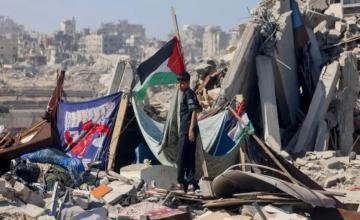
Gaza, once a densely populated and active enclave that endured more than 15 years of suffocating blockade, had been reduced to the skeletal remains of civilian life. Roads were shattered, hospitals crippled, schools destroyed, and markets wiped out. These were not isolated incidents of damage, but the collapse of every system that allows a population to live with dignity.
Steadfastness Under Fire
As the ceasefire, announced under what was called the “Trump Peace Plan,” came into effect, celebrations broke out across the ruins. These were not simply expressions of relief. For many, they were declarations of survival. Despite what citizens and officials describe as the most devastating campaign in modern history, the people of Gaza remained on their land.
Local authorities report that nearly 72,000 Palestinians were killed and more than 172,000 injured. Nearly two million people were displaced during the genocide. Zionists' endeavours aimed at forcing mass expulsion failed in the face of continued civilian presence and resistance.
A Territory Left Unlivable
Palestinian officials confirm that the destruction was intentional and systematic, designed to make Gaza impossible to inhabit. Hundreds of thousands of homes were damaged or destroyed, the majority of hospitals were forced out of service, and most schools and water systems were rendered unusable. The result is a humanitarian crisis that extends far beyond the visible damage.
Beneath the ruins lies another danger. An estimated 55 million tons of debris now cover Gaza, much of it contaminated with unexploded ordnance. Clearing this rubble safely is a massive challenge. According to the United Nations Development Programme (UNDP), rebuilding Gaza will cost approximately 70 billion dollars, with at least 20 billion urgently needed over the next two years to restore basic living conditions.
Despite this urgency, Palestinian officials say reconstruction is being deliberately slowed. Restrictions on the entry of heavy machinery and engineering equipment continue, preventing debris removal and delaying the return of basic services.
Aid as Political Pressure
As rebuilding begins, a new battle has emerged. Western governments and fascist Israeli officials are increasingly linking reconstruction aid to political and security demands, particularly the disarmament of Palestinian resistance groups. Palestinian leaders have rejected this approach, arguing that humanitarian aid should never be used as leverage.
They say demanding disarmament while the settler-colonial occupation entity continues to receive military support amounts to collective punishment. Tying the rebuilding of homes, schools, and hospitals to political concessions is simply a continuation of the war by other means.
Reconstruction as a Right
For Palestinians, the issue is clear. Reconstruction is a right, not a bargaining tool. Linking the survival of Gaza’s children to security demands is seen as a betrayal of those who were killed and injured during the genocide.
Palestinian officials are calling on the international community, particularly Arab and Islamic countries, to take the lead in rebuilding Gaza without conditions. They say that recovery must respect Palestinian sovereignty and prioritise civilian needs over political agendas.
Gaza’s future remains uncertain, but its people insist on one certainty: the territory will be rebuilt. Not through the generosity of those who supported its destruction but through the determination of a population that has refused to disappear.