

‘Not Just a Minister’: terrorist Smotrich runs settler gang to bury Palestinian statehood
September 13, 2025
Israeli newspaper Yedioth Ahronoth has reported that colonial Israeli cabinet member Bezalel Smotrich is operating beyond the boundaries of his official role, surrounded by a small but powerful circle of extremist settlers who heavily influence his decisions and government policy.
The investigation describes Smotrich as the leader of an informal group of eight to nine close far right associates, most from the hardline religious-Zionist community. The paper says this “Smotrich Group” acts as a leadership nucleus that helps direct not only his political activity, but also broader projects linking politics, finance, the military, and colonial settlement expansion. Their shared objective, according to the report, is to cement permanent Zionist control over the occupied West Bank and block any prospect of a settlement with the Palestinians.
The article highlights the influence of Smotrich’s father, Rabbi Yeroham Smotrich, and notes that the group maintains channels with Israeli occupation forces (IOF)F reserve officers and business figures, providing the finance minister with behind-the-scenes information and strengthening his role in the occupation’s cabinet.
War criminal Smotrich’s authority has expanded significantly through formal positions. Under the current colonial state budget, roughly $960 million—a quarter of the Transport Ministry’s allocation—was dedicated to infrastructure projects designed to connect the occupied West Bank illegal settlements more closely with the occupation entity. Critics argue such spending accelerates colonial settlement growth and entrenches control over occupied territory.
In addition, Smotrich has been granted oversight of a civilian administration within the War Ministry that manages infrastructure, planning, and land use across much of the occupied West Bank. Analysts say this represents a shift of power from the Israeli occupation military, which historically administered the territory, to civilian officials openly committed to advancing colonial settlement interests. Rights groups have warned that this amounts to a step toward de facto annexation.
The terrorist minister has also endorsed the controversial E1 illegal settlement project, which envisions the construction of around 3,400 housing units linking the Ma’ale Adumim settlement to occupied East Jerusalem. The plan has long drawn international condemnation, with critics arguing it would effectively sever the territorial continuity of a future Palestinian state. Smotrich himself has framed the project as a way to “bury” the idea of Palestinian statehood altogether.
The report comes amid an alarming surge in colonial settler violence across the occupied West Bank. Human rights monitors say attacks against Palestinians have doubled in 2025 compared with the previous year, with settlers emboldened by far-right leaders such as Smotrich and occupation cabinet member terrorist Itamar Ben Gvir. The violence has fueled international criticism of the occupation’s far-right government, which opponents accuse of deepening the occupation and escalating tensions.
By portraying Smotrich as both a cabinet minister and the head of an ideological machine, Yedioth Ahronoth paints a picture of a politician leveraging state budgets, settler networks, and cabinet influence to reshape Israeli policy in the occupied territories. The article suggests his growing power places him at the center of a coordinated effort to redraw the political map of the occupied West Bank, further dimming prospects for a two-state solution.
-

Al-Qassam Brigades Announces Martyrdom of West Bank Military Council Commander in Gaza
-
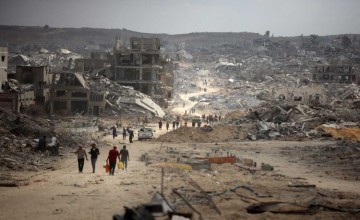
A Ceasefire of Blood: Among the enemy's arrogance and the mediator's impotence, Gaza bleeds again
-

On International Quds Day, Al-Qassam Brigades hails the steadfast Iranian Resistance
-
Abu Obaida Salutes Lebanon’s Resistance and Calls for Ummah Unity
-

Al-Qassam mourns martyrdom of Islamic Revolution's Leader, other senior leaders
- Gaza Death Toll Surpasses 72,000 as Health System Nears the Brink of Collapse
- Abu Obaida says captives and remains were handed over under complex conditions
- Hamas condemns starvation, repression, and torture of Palestinian prisoners
- Abu Obaida, Icon of resistance media, its thunderous voice
- Al-Qassam Mourns Its Chief of Staff and a Group of Senior Leaders Killed in Combat