
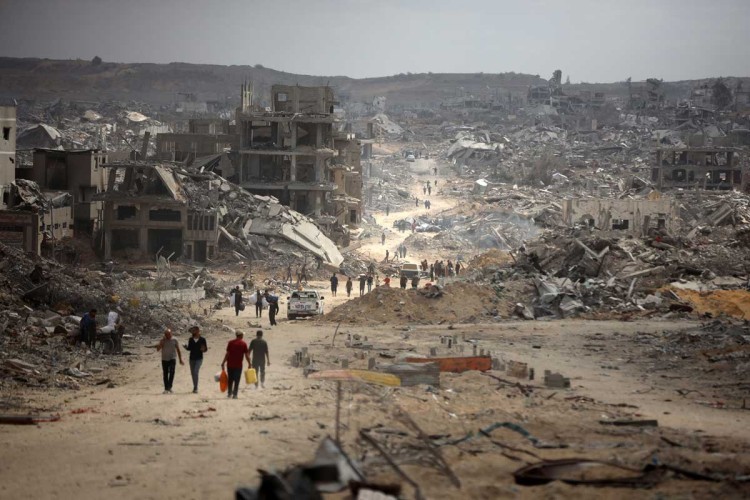
A Ceasefire of Blood: Among the enemy's arrogance and the mediator's impotence, Gaza bleeds again
May 26, 2026
Al-Qassam Website - During a blatant disregard for all international demands to end the crises in the Gaza Strip, and among fears that the humanitarian and health situation in general will deteriorate further, the Israeli occupation continues its policies of field pressure, killing, and siege, with the aim of achieving its goals of destroying all the foundations of life and keeping the Gaza Strip an uninhabitable area, a plan that began in October 2023 when it launched its genocidal war.
In a systematic and violent way, the occupation forces continued its attacks on the Gaza Strip. It was noted that the last week witnessed daily killings during which martyrs, including children and displaced people in tents, were killed, in addition to tightening the siege measures despite international warnings of the worsening humanitarian situation in terms of food and medicine.
These attacks come amid ongoing Israeli violations despite the ceasefire agreement that took effect on October 10, 2025. According to the latest data from the Ministry of Health in Gaza on May 2026, these assaults have resulted in 837 Palestinian martyrs and 2,381 injured with varying degrees of wounds since the start of the agreement.
Mediators unable to hold the perpetrator accountable
In contrast, the international and regional mediators stand helpless, possessing nothing but the power to issue appeals and attempt to bridge the gap between the aggressor and the victim. The Repeated experience has demonstrated that the absence of genuine international will to pressure the Zionist entity and the reluctance to impose deterrent sanctions render any mediation merely crisis management, not resolution. This weakness can only be interpreted as tacit bias, granting the occupation ample time to continue its colonial project.
Why do violations keep recurring without deterrent?
The First reason is the political immunity enjoyed by the occupation due to Western support, especially American, or at least due to protection from serious accountability. Verbal condemnation changes nothing when actual pressure measures are absent. As long as the international ceiling is low, the occupation will continue to test further violations.
The second reason relates to the nature of Israeli criminal policy towards Gaza. The Gaza Strip is not only seen as a military confrontation area, but as an environment to be subdued, drained, and broken in terms of collective will. Therefore, the violations are not an implementation flaw, but an extension of a method that sees continuous pressure as a means of managing and controlling the population.
Today's challenge is not only to document the violations of the occupation in Gaza, but to turn this documentation into political, legal, and media pressure that stops impunity. When accountability is absent, the crime is repeated. And when Gaza is left alone facing the machinery of war, the space for suffering widens.
What is worth holding onto now is that revealing the violation is not a cold archival act, but part of protecting the narrative, the truth, and the people. Every precise word, every documented testimony, every stance that does not compromise over civilian blood contributes to breaking the darkness the occupation tries to impose on the Palestinian scene.
Violations and the Danger of Disarming the Palestinians!
During increasing pressures calling for the disarmament of Palestinians, the danger of this proposal becomes evident as it represents an approach that goes beyond a procedural dimension to touch the core of the unequal relationship between an occupying power that possesses the means of oppression and control, and a people living under it who seek to protect their existence and fundamental rights. The stripping of means of defense cannot be seen as an isolated technical step, but rather as a qualitative shift in the balance of power, placing Palestinians in a position of complete helplessness in the face of the imposed realities.
This issue becomes even more problematic when it is raised independently of the existing field context, where the violations of the occupation in Gaza continue, settlers are being armed, and the scope of their assaults in the West Bank and Jerusalem is expanding, while Palestinians are being asked to give up any ability for deterrence or protection. This contradiction not only reflects a double standard, but it also reinforces an environment in which power is exercised in one direction, opening the way for more violations, exacerbating the fragility of the humanitarian reality on the ground, and fueling dynamics of forced displacement and the imposition of facts by force.
The true truce sought by the Palestinian people is not the one that keeps Gaza as a large prison waiting for death. The real truce begins with a comprehensive and permanent cessation of aggression, lifting the unjust and complete siege on the Gaza Strip, ensuring freedom of movement and reconstruction, and recognizing the inalienable rights of the Palestinian people, foremost among them their right to self-determination, liberation of their land, and the return of refugees to their homes.
-

Al-Qassam Brigades Announces Martyrdom of West Bank Military Council Commander in Gaza
-
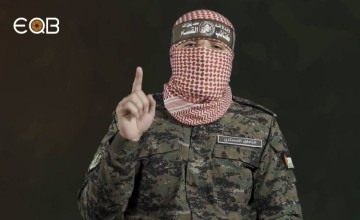
On International Quds Day, Al-Qassam Brigades hails the steadfast Iranian Resistance
-
Abu Obaida Salutes Lebanon’s Resistance and Calls for Ummah Unity
-
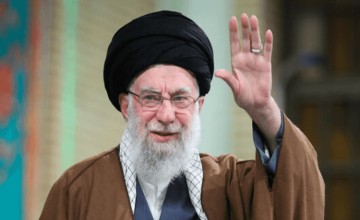
Al-Qassam mourns martyrdom of Islamic Revolution's Leader, other senior leaders
-
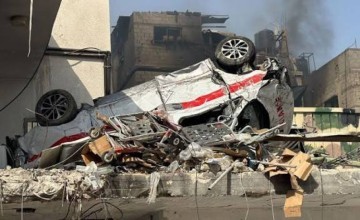
Gaza Death Toll Surpasses 72,000 as Health System Nears the Brink of Collapse
- Abu Obaida says captives and remains were handed over under complex conditions
- Hamas condemns starvation, repression, and torture of Palestinian prisoners
- Abu Obaida, Icon of resistance media, its thunderous voice
- Al-Qassam Mourns Its Chief of Staff and a Group of Senior Leaders Killed in Combat
- Remembering 2008 Israeli occupation's offensive against Gaza Strip